Serve Errors and How to Fix Them
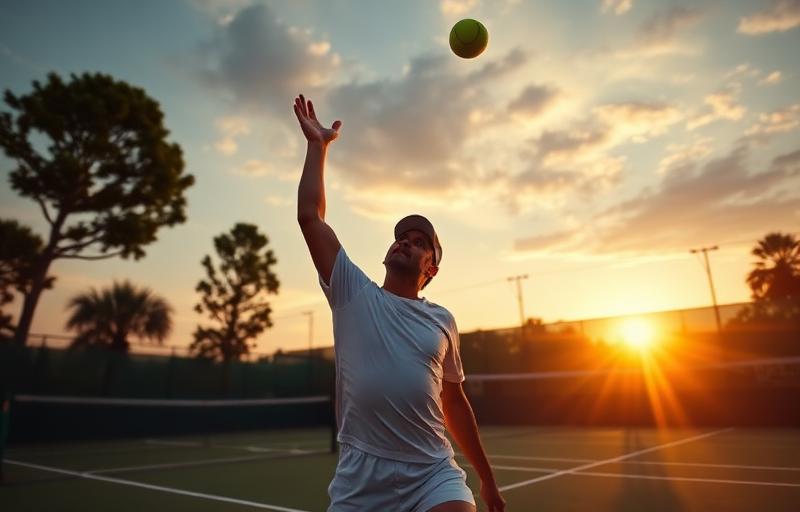
Hello to all tennis enthusiasts! I'm your expert coach, and today we're going to talk about one of the most important elements in our beloved game – the serve. The tennis serve is not just putting the ball into play; it's your first and often decisive step to winning the point. A strong, accurate, and consistent serve can set the tone for the entire match, demoralize your opponent, and earn you easy points. But unfortunately, very often players, especially beginners, make serve errors that hinder their progress and strip them of confidence on the court.
In this article, we will delve deep into the world of serving, analyze the most common serve errors, and most importantly – give you proven serve technique tips and exercises so you can correct them. Moreover, we will look at how modern technologies, such as AI analysis, can help you reach new heights in your serve. Ready? Let's go!
Why is the serve so important?
Before we go into details, let's make sure everyone understands the critical importance of the serve. Firstly, it's the only shot in tennis that you completely control. You decide when and how to execute it, without any interference from your opponent. This is your "free" opportunity to score a point or gain a strategic advantage. Secondly, a quality serve saves your energy. Instead of exhausting long rallies, you can win points faster, saving energy for key moments of the match. Thirdly, it's a powerful psychological weapon. An opponent who constantly feels pressure from your serve begins to get nervous, make mistakes, and lose confidence.
Now that we understand the full power of the serve, let's figure out what most often prevents us from getting the most out of it.
Common Serve Errors and How to Fix Them
We will divide the errors into several main categories to make it easier for you to understand where exactly you might be going wrong and how to fix it.
1. Ball Toss Problems
The ball toss is the foundation of any good serve. Without a proper toss, all other elements of the technique crumble.
Error: Irregular or inaccurate toss
- Description: The ball is tossed to a different spot every time – too far forward, backward, to the side, too low, or too high. This forces you to constantly adjust to the ball instead of executing a learned movement.
- Why it happens: Insufficient attention to this element, using only the wrist instead of a smooth movement of the entire arm, lack of a fixed starting point.
- How to fix:
Exercise 1 (Toss and Stop): Stand in your ready position for the serve. Instead of hitting immediately, toss the ball, catch it, and evaluate how accurately it landed in an imaginary plate above your head. Repeat this exercise 20-30 times, focusing on a smooth and controlled arm movement. Exercise 2 (Toss to the Wall): Stand facing a wall at a distance of 1-2 meters. Toss the ball so that it touches the wall at the same point. This will help develop muscle memory. Tip: Use your entire arm (shoulder, elbow, wrist) for a smooth upward motion, not just wrist movement. Release the ball when your arm is extended upward. Try to imagine you are placing the ball on a shelf. Key point: The ball should reach the peak of its trajectory just above the point of your maximum extended hit.
Error: Tossing the ball too far to the side of the body (for a flat serve)
- Description: The ball is tossed directly overhead or slightly behind. This prevents you from bringing your body weight forward and hitting the ball at the most extended position, reducing power and stability.
- Why it happens: Lack of understanding of the ideal contact point for a flat serve, fear of stepping forward.
- How to fix:
Exercise: Toss the ball so that it lands on the court approximately 30-40 cm in front of your leading foot. Your task is to hit the ball before it drops below your shoulder. Tip: For a flat serve, the ideal toss point is slightly in front and slightly to the right of your head (for right-handers).
2. Grip Problems
The serve grip is very specific and differs from grips for other shots. An incorrect grip is one of the biggest serve errors.
Error: Eastern or semi-western grip (Continental or Eastern Grip instead of Hammer Grip)
- Description: Many beginners find it natural to hold the racket as they would for a forehand. This limits wrist and forearm rotation, preventing maximum racket head speed and imparting the necessary spin to the ball.
- Why it happens: Habit from other shots, lack of instruction on the correct serve grip.
- How to fix:
Technique: Use a "continental" grip (Hammer Grip), sometimes called a "hammer grip." Imagine you are hammering a nail. This will allow you to naturally use forearm pronation for a powerful and varied shot. Check: Place the racket on its edge on the court. Pick it up, holding the handle as you would a hammer or a butterfly net. Your index finger should be slightly extended. * Exercise: Practice the grip off-court and get used to it. Then try tossing the ball and mimicking the serve with this grip without hitting the ball, feeling the forearm movement.
3. Lack of "Trophy Pose" and Proper Stance
The trophy pose is a key moment in the kinetic chain of the serve. It allows energy to be accumulated before the explosive movement.
Error: Lack of a full "Trophy Pose"
- Description: The player skips the stage where the racket is brought back behind the back and the ball is tossed up. This pose resembles an athlete throwing a javelin or a ball. Instead, the movement starts immediately from above.
- Why it happens: Rushing, lack of understanding of the importance of energy accumulation, unwillingness to "linger" in the movement.
- How to fix:
Exercise 1 (Slow Motion): Perform the serve at a very slow pace, concentrating on correctly assuming the "trophy position" – ball up, racket behind the back, elbow pointing up, knees bent. Hold this pose for 1-2 seconds to feel it. Exercise 2 (Ball Throw): Stand in the serve position, toss the ball, and mimic throwing a tennis ball against a wall (or into an empty field), using the same kinetic chain as in the serve – Trophy Pose, then a "hit" with the shoulder and arm. * Tip: The "Trophy Pose" begins with a slight bend in the knees, bringing the racket back, and then it drops "head" down behind the back. This creates a "catapult" effect.
Error: Lack of "Knee Bend" and Weight Transfer
- Description: The legs remain straight or do not bend enough during preparation for the shot. This deprives you of the ability to use leg strength for a powerful push and vertical jump.
- Why it happens: Incorrect understanding of how to engage the whole body, fear of losing balance.
- How to fix:
Exercise: Practice the serve, focusing only on leg work. Feel how you lower yourself, and then explosively push up and forward. Imagine you are a spring. Tip: Synchronize knee bend with the ball toss. When the ball reaches its peak, you should be at the lowest point of the "knee bend," preparing to jump.
4. Contact Point Problems
The contact point is the moment the racket meets the ball. It determines the direction, speed, and spin of the ball.
Error: Hitting the ball too low or behind you
- Description: You hit the ball when it has already dropped below the optimal point, or too close to your body. This leads to less efficiency, loss of power, and the ball going into the net or out of bounds.
- Why it happens: Late toss, inability to reach, fear of colliding with the ball.
- How to fix:
Exercise 1 (Explosive Footwork): Use the same toss, but focus on jumping up and forward, reaching as far as possible for the ball. Imagine you are trying to pick an apple from a high branch. Exercise 2 (Cone Work): Place a cone on the service line. Aim for it to encourage bringing your body forward and hitting at a higher point. * Tip: Use visualization. Imagine you are "stroking" the ball upward, as if extending it, rather than just hitting it down.
Error: Lack of Pronation
- Description: After impact, the racket remains in the same position and does not "close" inward, as with forearm movement. Pronation is the inward rotation of the forearm, similar to unscrewing a light bulb. This is a key element for power and spin.
- Why it happens: Incorrect grip, lack of understanding of movement mechanics, or an attempt to "control" the ball, preventing natural movement.
- How to fix:
Exercise 1 (Hammer Grip): Return to the continental grip. Feel how, upon impact, your palm holding the racket naturally turns downward, as if you are screwing in a screw. Exercise 2 (Hitting over the Net): Practice serving, focusing on the racket head moving faster through the ball, and then "catching" the ball and rotating the forearm. At the end of the movement, you should notice that your racket strings are pointing down or slightly to the side. * Tip: Pronation occurs after hitting the ball; it is a natural continuation of the movement, not a separate action. It helps accelerate the racket head and impart powerful spin to the ball.
5. Follow Through Problems
The follow-through is not just "finishing" the shot; it's an important part of transferring momentum and maintaining balance.
Error: Abrupt Stop
- Description: After hitting the ball, the racket's movement stops abruptly or there is no full follow-through. This leads to a loss of power and control over the ball.
- Why it happens: Desire to "keep" the ball in the court, lack of natural inertia, trying to grip the racket too tightly.
- How to fix:
Exercise (Full Follow-Through): Practice serving, consciously bringing the racket to a complete finish, as if "hugging" yourself with your arm. Finish the movement so that the racket passes along your left side of the body (for right-handers). Tip: Imagine you are pushing your weight forward over the line. Your body should move forward after contact.
6. General Tactical and Psychological Errors
Even with perfect technique, these errors can undermine your serve.
Error: Lack of Variety
- Description: You always serve the same type of serve to the same spot.
- Why it happens: Comfort, fear of experimenting, lack of understanding of tactics.
- How to fix:
Exercise: Every time you practice serving, do sets of 3-5 serves to each area: flat to the center, slice out wide, kick to the backhand. The goal is to learn to confidently change serve types. Tip: Learn to serve not only for speed but also for spin (kick, slice). Variety makes your serve unpredictable and difficult to return.
Error: Overthinking
- Description: During the serve, you are focused on every technical element instead of executing it naturally.
- Why it happens: Striving for perfectionism, lack of movement automation.
- How to fix:
Exercise (Visualization): Before serving, close your eyes and imagine the perfect serve: the ball's trajectory, the sound of impact, its landing in the desired zone. Tip: Automation comes with thousands of repetitions. Analyze during practice, but in a match, just trust your body. Choose one goal (e.g., "flat to the center") and execute it.
How AI Analysis Can Help You Fix Errors
In modern tennis, we have unique opportunities for development. Today, you no longer need to rely solely on a coach's subjective assessment. Tools such as AI analysis can give you incredibly accurate and objective feedback.
- Accuracy: AI can accurately determine joint flexion angles, racket head speed, contact point, and body position at every moment. It doesn't get tired or miss details.
- Objectivity: Unlike the human eye, AI is not subject to bias or fatigue. It provides raw numbers and clear visualizations.
- Quick error detection: By uploading a video of your serve, you will almost instantly receive a detailed report on your strengths and aspects that need improvement.
- Individual plan: Based on the analysis, AI can suggest personalized exercises and recommendations specifically designed for your serve technique.
Imagine having a 24/7 coach who can analyze your every move! This significantly speeds up the learning process and the correction of serve errors.
Practical Tips for Improvement
- Patience: Correcting technique is a process. Don't expect instant results. Be patient and consistent.
- Record yourself: Video recording is your best friend. You can't fix what you can't see. Watch your recordings, compare them with professional videos.
- Work off-court: Flexibility, strength, and coordination exercises (especially for shoulders, core, and legs) will significantly improve your serve. Medicine balls, resistance bands, jump ropes – all will be useful.
- Focus on one element: Don't try to fix everything at once. Choose one error, focus on it for several training sessions until you feel an improvement.
- Use analysis services: If you have the opportunity, be sure to use AI analysis. It's an investment in your tennis future.
Conclusion
Your tennis serve is not just a shot; it's a reflection of your will to win, your discipline, and your strategic thinking. Eliminating serve errors will not only improve your results but also bring immense enjoyment to the game. Remember that every great champion once started by mastering the basics. Apply these tips, be persistent, and you will see your serve turn into a formidable weapon!
Want a personalized breakdown of your technique? Upload your video to playbettertennis.app and get an analysis from an AI coach →
Related articles
-
Mastering Serve Speed 180 Tennis: Your Step-by-Step Guide to a Dominant ServeDreaming of hitting a powerful 180 km/h serve? This comprehensive guide breaks down the essential techniques, exercises, and drills to significantly increase your serve speed. Unlock your potential and add serious pace to your game.
-
Serve Speed 180 Tennis: A Step-by-Step Guide to a Powerful ServeDreaming of a serve flying at 180 km/h? This step-by-step guide will help you understand the technique, physics, and training to significantly increase your tennis serve speed.
-
Mastering the Alcaraz Serve Tennis: A Step-by-Step GuideCarlos Alcaraz's serve is a masterclass in modern tennis. This guide breaks down his powerful technique, offering actionable steps to improve your own service game. Discover the biomechanics and drills behind one of the fastest serves on tour.
-
Alcaraz's Serve in Tennis: A Step-by-Step Guide to Dominating the CourtLearn how to improve your tennis serve by analyzing Carlos Alcaraz's technique. This guide will help you achieve maximum efficiency and power. Follow our step-by-step instructions.