How to Hold a Tennis Racket Correctly
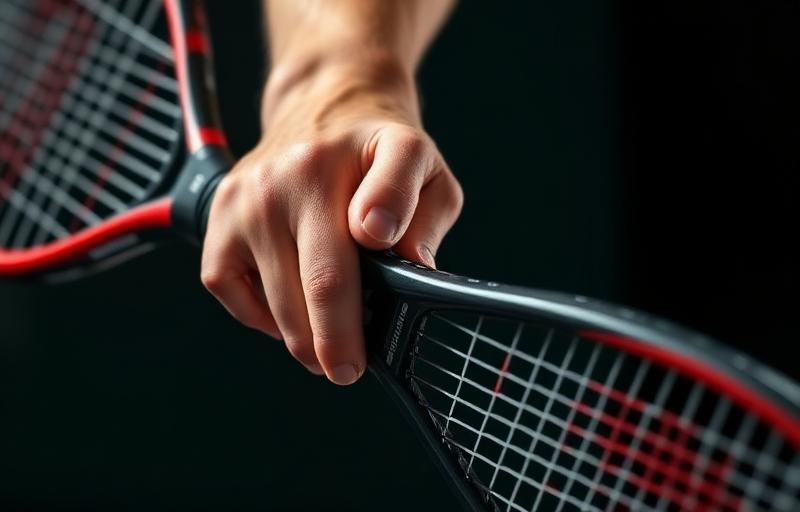
Hello, future champions and passionate tennis enthusiasts! Today, we're diving into one of the most fundamental, yet often underestimated, topics – how to hold a tennis racket correctly. You might have already heard that the racket grip is the foundation of everything, but do you truly understand how much it impacts your game? The right grip isn't just a way to hold a tool; it's your first step towards powerful serves, accurate forehands, reliable backhands, and delicate volleys. Let's break it down!
Why is the Racket Grip So Important?
Before we delve into the specifics of how to hold a tennis racket, let's understand why it's so critical. The racket grip determines:
- Racket face angle: This dictates how you approach the ball – flat, slightly angled for topspin, or for slice.
- Hitting zone: Different grips allow for more effective play with balls at various heights and positions.
- Power and control: The correct grip allows you to optimally engage the strength of your forearm, wrist, and entire body, providing both power and precision.
- Injury prevention: An incorrect grip can lead to excessive strain in the wrist, elbow, or shoulder, which can result in injuries.
- Shot versatility: With the right grip, you can execute various shots: from flat to heavily spun balls.
If you want to succeed on the court, be prepared to dedicate enough time to mastering and refining your grip. But don't worry, it's not as difficult as it seems!
Anatomy of a Tennis Grip: What are the Bevels and How to Find Them?
Before we move on to specific grips, let's understand how to orient yourself on the racket handle. Imagine your racket handle as a polygon. Most often, it's an octagon, meaning it has 8 bevels.
How to find the bevels:
- Place the racket horizontally in front of you so that the string bed is parallel to the ground.
- Main bevel (1): The one that lies completely horizontally.
- Auxiliary bevels: Count the bevels clockwise if you are right-handed, and counter-clockwise if you are left-handed.
Bevel 2: Top right slanted bevel. Bevel 3: Right vertical bevel. Bevel 4: Bottom right slanted bevel. Bevel 5: Bottom horizontal bevel. * And so on.
Your index knuckle: To determine the grip, you'll need to pay attention to the index knuckle of your palm (the bottom knuckle of your index finger). Its position on specific bevels will define your grip.
Main Grips in Tennis: From Classic to Modern
In tennis, there are several basic grips, each with its own advantages and disadvantages. We will cover the most popular ones: Continental, Eastern (forehand and backhand), Semi-Western, and Western.
1. Continental Grip
This is arguably the most versatile and "old-fashioned" grip, perfectly suited for many situations.
How to hold:
- Hold the racket as if you were holding a hammer.
- Your index knuckle (base of your index finger) should be on bevel 2 (top right slanted bevel for right-handers).
- Your thumb wraps around the handle, and the other fingers hold it loosely but firmly.
What it's good for:
- Serves: This is the standard grip for serves.
- Volleys: Ideal for net play, as it allows for quick changes in the racket face angle.
- Smashes: Similar to a serve, the Continental grip is very effective here.
- Slices: Allows for easy generation of backspin.
- Drop Shots: Also good for slicing.
Advantages:
- Versatility: You don't need to change grips for different shots, which saves time.
- Good for slice: Easy to create backspin.
- Ideal at the net: Quick reactions at short distances.
Disadvantages:
- Difficult to generate strong topspin: Requires strong wrist movement.
- Hard to hit high balls: Requires significant wrist contortion.
- Insufficient power for flat shots: Compared to more aggressive grips.
Recommended for: Beginners for learning various shots, players who play a lot at the net, and everyone for serves and slices.
2. Eastern Grip
The Eastern grip is an excellent compromise between versatility and the ability to generate spin.
2.1. Eastern Forehand Grip
How to hold:
- Your index knuckle should be on bevel 3 (right vertical bevel for right-handers).
- Your palm lies almost completely on the back of the handle.
What it's good for:
- Flat forehands: Allows for powerful shots with high speed.
- Moderate topspin: Can easily generate topspin without significantly changing the stroke mechanics.
- Mid-height balls: Convenient for handling balls around waist height.
Advantages:
- Easy transition from Continental: A small grip change.
- Good balance of power and control: An excellent option for starting to learn the forehand.
- Allows for both flat and spin shots: Great versatility.
Disadvantages:
- Harder to hit very high or very low balls: Requires more wrist flexion.
- More effort needed for strong topspin: Compared to Semi-Western or Western.
Recommended for: Beginners and intermediate players who want to master a powerful forehand with spin capabilities. Many professionals still successfully use it.
2.2. Eastern Backhand Grip
How to hold (one-handed backhand):
- Rotate the racket so your index knuckle is on bevel 1 (top horizontal bevel for right-handers).
- Your thumb can slightly wrap around the handle or be positioned diagonally.
What it's good for:
- One-handed backhand: One of the most common grips for this shot.
- Flat and slice backhands: Allows for good speed and control.
Advantages:
- Natural feel: Many players find it very comfortable.
- Good for slice: Easy to create backspin.
- Excellent control: Allows for high precision in ball placement.
Disadvantages:
- Harder for heavily spun backhands: Requires very good coordination.
- Can be difficult against balls with strong topspin: Especially if the ball bounces high.
Recommended for: Players learning the one-handed backhand.
3. Semi-Western Grip
This is one of the most popular grips in modern tennis, especially for the forehand. It allows for generating strong topspin.
How to hold:
- Your index knuckle should be on bevel 4 (bottom right slanted bevel for right-handers).
- Your palm is significantly "under" the racket.
What it's good for:
- Strong topspin on the forehand: Your main attacking tool.
- Controlling high balls: This is the ideal grip for hitting balls after an opponent's strong topspin.
- Forehands at shoulder level or higher: Allows for "looping" the ball from bottom to top.
Advantages:
- Maximum topspin: Allows for aggressive attacking and effective ball control.
- Good for handling high balls: Most modern players prefer this grip to counter high bounces.
- Allows for a good swing: A long bottom-up swing is natural for this grip.
Disadvantages:
- Harder to hit low balls: Requires more bending at the knees and body lean.
- Slower transition to other grips: Harder to quickly switch to Continental for volleys.
- Can cause wrist strain: If the technique is incorrect.
Recommended for: Advanced amateurs and professionals who want to dominate with their topspin forehand.
4. Western Grip
The most "extreme" of the forehand grips, maximally geared towards topspin.
How to hold:
- Your index knuckle should be on bevel 5 (bottom horizontal bevel for right-handers).
- Your palm is completely under the handle.
What it's good for:
- Maximum topspin: Allows for creating incredible topspin.
- Hitting very high balls: Ideal for balls bouncing above shoulder level.
Advantages:
- Unrivaled spin: The ball drops very quickly and deeply.
- Allows for very aggressive hitting of high balls: Practically the only grip for comfortable play with "loop" balls.
Disadvantages:
- Extremely difficult to hit low balls: Requires a lot of squatting and wrist contortion.
- Very slow transition to other grips: Practically requires playing the entire court with this grip.
- High risk of wrist injuries: Due to the extreme position.
Recommended for: Rarely used, but sometimes seen in players with a very open stance and a powerful forehand, focused on maximum topspin. For example, some junior players try to master it for incredible spin.
5. Two-Handed Backhand
The popularity of the two-handed backhand is growing worldwide, and for good reason. It provides stability, control, and power.
How to hold:
- Dominant hand (bottom, for right-handers – left): Uses an Eastern grip or Semi-Western grip for left-handers. That is, the index knuckle of the left hand on bevel 3 (counting for the left hand).
- Non-dominant hand (top, for right-handers – right): Uses a Continental grip (index knuckle of the right hand on bevel 2).
- Hands are positioned close to each other.
What it's good for:
- Stable and powerful backhand: Allows for generating much more power and control than a one-handed backhand.
- Hitting heavily spun balls: Two hands provide better stability.
- Balls at any height: More convenient for handling high and low balls.
Advantages:
- High stability and control: Especially under pressure.
- Greater power: Two hands allow for engaging more muscle groups.
- Less strain on one arm: Reduces the risk of injuries.
- Effectiveness against a wide range of balls: More versatile.
Disadvantages:
- Smaller reach: Due to holding the racket with two hands.
- Harder for short balls and slices: Requires more skill for delicate shots.
Recommended for: The vast majority of players – this is the standard.
Variations and Hybrids
Remember, the described grips are basic models. Many players skillfully adapt them to their needs, creating hybrids or slightly shifting the knuckle by half a bevel. It's important to find what works FOR YOU!
How to Choose Your Grip?
Choosing a grip is a very individual process, depending on your physiology, playing style, and goals.
- Start with the basics: Beginners are recommended to start with an Eastern grip for the forehand and an Eastern or two-handed grip for the backhand. Continental is essential for serving and volleys.
- Experiment: Try each grip, hitting balls. Feel how the string angle changes, and how it affects the shot.
- Evaluate your playing style:
Do you prefer an attacking style with strong spin? A Semi-Western or Western forehand might suit you. Do you like to come to the net? Continental is your best friend. * Do you need balance? Eastern is an excellent choice.
- Listen to your body: If a grip causes discomfort or pain, it's a sign that it's not right for you or your technique needs correction.
- Observe professionals: Pay attention to what grips your favorite players use. While blindly copying them is not advisable, it can provide ideas.
- Work with a coach: An experienced coach can analyze your technique and recommend the optimal grip.
Practical Exercises for Mastering Grips
Simply knowing about grips is not enough; you need to practice their application.
Exercise 1: "Instant Switch"
Goal: Develop quick and accurate switching between grips.
Execution:
- Assume your ready position on the court.
- Hold the racket with a Continental grip.
- Imagine the ball flying for a forehand – quickly switch to an Eastern or Semi-Western grip. Hold for a second.
- Imagine the ball flying for a backhand – quickly switch to an Eastern/two-handed backhand. Hold for a second.
- Imagine you need to come to the net – quickly switch to a Continental grip.
- Repeat for 5-10 minutes, increasing speed.
Tip: Ideally, do this while someone is feeding you balls.
Exercise 2: "Shadow with Different Grips"
Goal: Refine the stroke mechanics for different grips without a ball.
Execution:
- Choose one grip (e.g., Semi-Western forehand).
- Perform 10-15 "air strokes," focusing on the correct backswing, (imagined) contact, and follow-through.
- Change the grip (e.g., to Eastern backhand).
- Repeat 10-15 "air strokes."
- Do this with all main grips.
Tip: Do this in front of a mirror to see the racket position and your body.
Exercise 3: "Target Hitting with One Grip"
Goal: Solidify the feeling of hitting with a specific grip.
Execution:
- Choose one grip (e.g., Eastern forehand).
- Hit 20-30 balls into a ball basket (or to a partner) ONLY with this grip. Do not change it, even if it feels uncomfortable.
- Focus on the sensations, how the ball leaves the strings, how it spins.
- Rest and move on to the next grip.
Tip: Record yourself on video to analyze your technique later.
Exercise 4: "Pendulum" – Checking the Continental Grip
Goal: Feel the correct racket position for serving and volleys.
Execution:
- Hold the racket with a Continental grip.
- Extend your arm with the racket in front of you, as if you are looking at a watch.
- Imagine your arm is a pendulum. Swing the racket up and down, left to right.
- Notice that without changing the grip, you can easily control the racket face for various directions. This is the versatility needed for volleys and serves.
Common Mistakes When Holding the Racket
- "Death grip": Squeezing the handle too tightly. This leads to tension, loss of racket head speed, and quick fatigue. Relax!
- "Spoon grip": An open racket face position with a Continental grip, like a spoon. Usually for slice shots, but incorrect use for flat shots results in loss of control.
- "Too slippery grip": The racket slips out of your hand, requiring constant adjustment. You might need an overgrip or your grip is too weak.
- Inability to change grips: Trying to play all shots with one grip. This significantly limits your arsenal.
- Incorrect thumb position: The thumb should not be fully extended along the handle; it should be slightly bent to participate in generating power.
AI Technique Analysis: Your Personal Assistant
In the modern world of tennis, technology plays an increasingly important role. One of the most interesting tools is AI technique analysis. If you truly want to understand how correctly you hold the racket and how it affects your shot, artificial intelligence can provide incredibly accurate feedback.
How it works:
You record yourself on video during practice or a match. Then you upload this video to a specialized platform (for example, playbettertennis.app). The AI analyzes every frame of your movement, racket position, string angle, wrist, and forearm work. You receive a detailed report with precise recommendations that a human eye cannot always spot. It's like having your own coach who is always with you!
AI can identify the smallest nuances in your grip and its change during the stroke, which will allow you to precisely correct your technique and avoid errors leading to injuries or loss of power.
Conclusion
The racket grip is not just a detail; it's the foundation of your game. It determines your potential, your style, and your ability to adapt. Don't be afraid to experiment, practice, and most importantly – learn! Tennis is an endless journey of improvement, and every step, including holding the racket correctly, brings you closer to becoming a confident and successful player.
Don't forget to relax your palm, breathe, and enjoy every shot! And remember that even the greatest champions constantly work on their technique.
---
Want a personalized analysis of your technique? Upload a video to playbettertennis.app and get an analysis from an AI coach →
Related articles
-
Tennis Elbow: Your Step-by-Step Guide to Preventing & HealingSuffering from tennis elbow? This comprehensive guide offers actionable steps to prevent this common injury and effectively recover, getting you back on court stronger than ever.
-
Tennis Elbow: A Step-by-Step Guide to Treatment and PreventionTennis elbow is one of the most common injuries in tennis. This step-by-step guide will help you avoid pain and return to the court in full fighting form.
-
Tennis Elbow: A Step-by-Step Guide to Treatment and PreventionTennis elbow is one of the most common injuries in tennis. This step-by-step guide will help you avoid pain and return to the court in full fighting form.
-
How to Hold a Racket CorrectlyThe correct racket grip is the foundation of successful tennis play. It determines the accuracy, power, and control of your shots. In this article, we will thoroughly examine all the main grip types, explain how to master them, and provide practical tips.